French Lace vs Swiss Lace: Which Lace Base to Choose for Men's Hair System?
French Lace vs Swiss Lace: Which Lace Base to Choose for Men’s Hair System?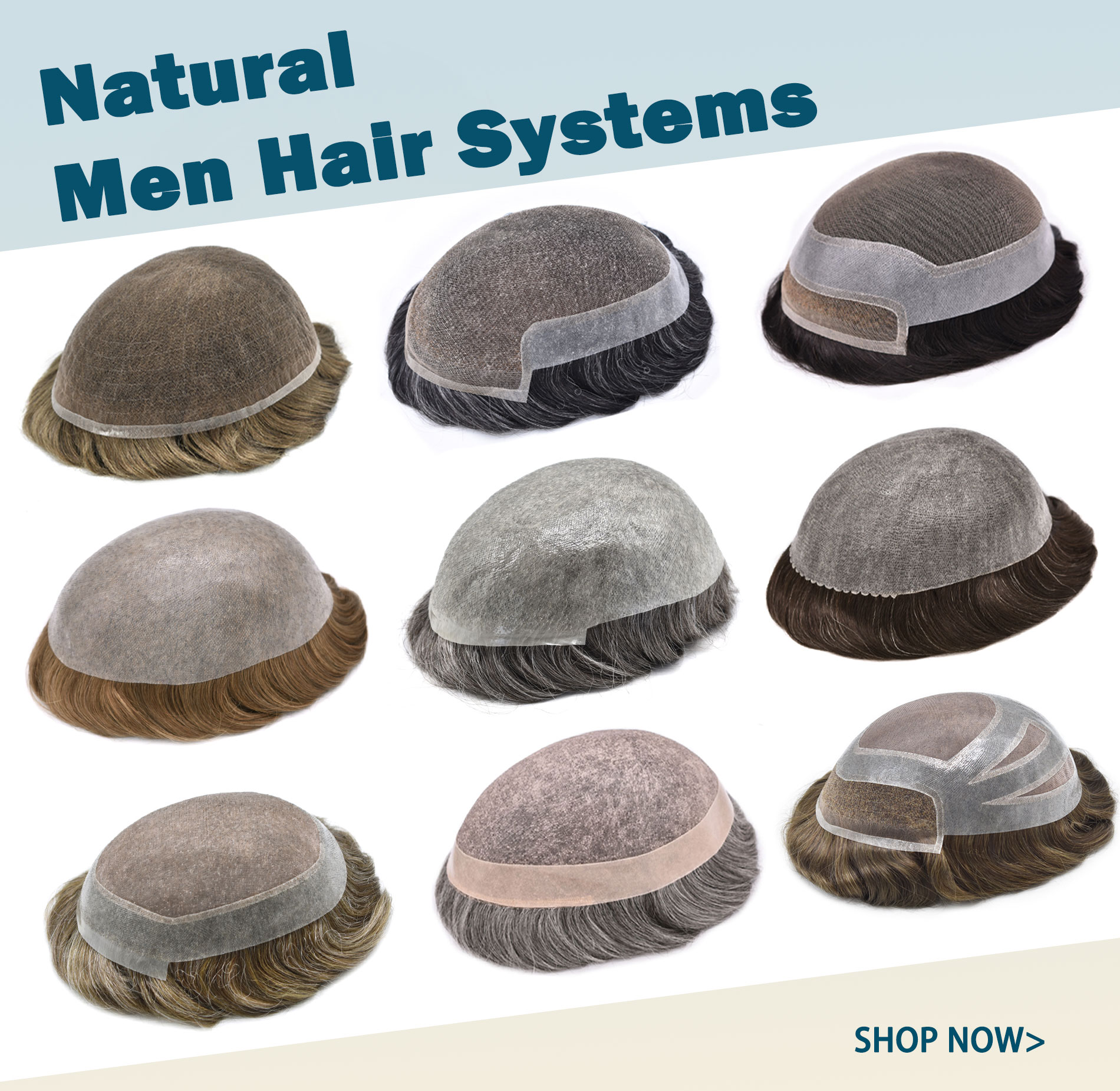
In men's hair systems, the choice of lace base directly affects the concealment, comfort and maintenance cost of daily wear. French lace and Swiss lace are two mainstream lace materials. They have different emphasis on thickness, durability and visual effects. Understanding these differences can help you make more accurate decisions based on your lifestyle and styling needs.
The core role of lace base
The lace base is used to fix the wig and fit the scalp, and the hair is crocheted on the lace mesh by hand or machine. The pore size, softness and strength of the lace determine whether the wig's forehead hairline is natural and whether it is suitable for long-term wear.
Features of Swiss Lace
Swiss lace is usually thinner, more transparent, and has finer pores. Its advantage is that it is extremely concealable and is almost invisible to the naked eye when it is close to the skin. It is especially suitable for styles where the forehead and hairline are completely exposed. The thin structure brings a light and breathable wearing feel, suitable for daily commuting, social occasions or users who need high-precision disguise in front of the camera.
The trade-off is relatively limited durability. Swiss lace is more likely to be damaged due to pulling, cleaning or wearing friction, so daily removal and maintenance require gentler techniques. For those who are using a wig system for the first time, unskilled operation may shorten the life of the base.
Features of French Lace
French lace has a slightly thicker mesh structure, a sturdier material, and is generally slightly thicker than Swiss lace. It still adheres well to the skin, but is slightly less transparent than Swiss lace, and may require more delicate bonding and setting to deal with the edges, especially under strong light or close viewing.
Durability is the main selling point of French lace. It can withstand higher tension and more frequent cleaning, and is suitable for people who exercise a lot, need to take it on and off every day, or who want to change it less frequently. If your hairline is usually obscured by bangs, parting, or a shaggy style, the small thickness difference of a French lace won't have a noticeable impact.
Invisibility comparison
Under the same skin tone and lighting conditions, Swiss lace is more invisible. If the forehead hairline is completely exposed, Swiss lace can provide a transition effect closer to real skin. French lace is not impossible to hide, but it does require more careful selection of lace color, use of the right glue or film, and regular trimming of the edges.
Breathability and comfort
Both are breathable materials. Swiss lace is thinner and has more obvious air circulation, making it less burdensome to wear in summer. French lace is slightly thicker, but in exchange for a more stable structure, there will be no obvious stuffiness when worn for a long time. However, for very sensitive users, Swiss lace will be lighter. Durability and Maintenance.
French lace is more suitable for high frequency use. It can withstand repeated sticking, tearing off and cleaning, and the edges will not tear easily. For Swiss lace, you need to avoid pulling hard, and do not rub the base when cleaning. When removing, use a special solvent to fully dissolve the glue and then slowly separate it.
In terms of maintenance costs, Swiss lace may need to be replaced more frequently, especially if it is worn every day and requires rebonding of the hairline. If French lace is properly maintained, the base can last longer, but problems with glue residue and mesh clogging require regular cleaning.
How to decide which one is more suitable for you
It can be judged from several angles: frequency of hairline exposure, daily wearing time, maintenance habits, budget and whether you exercise regularly. If you care most about "no one can tell you are wearing a wig" and can accept careful maintenance, Swiss lace is more suitable for your needs. If you care most about "the foundation can last longer and the operation is more worry-free", French lace is a more practical choice.
Daily care suggestions
No matter which lace you choose, you should use wig shampoo and conditioner to avoid direct contact of high-concentration alcohol products with the base. Use lace tape or skin glue when gluing, and control the amount according to the type of lace. The glue layer of Swiss lace should be thin and even, while the glue layer of French lace can be slightly thicker to ensure fixation. After taking it off at night, it should be placed on the wig stand to avoid folding the lace edges.
There is no absolute distinction between French lace and Swiss lace. The difference lies in usage scenarios and personal priorities. The former trades strength for daily convenience, while the latter trades lightness for ultimate naturalness.