How Modern Textured Hairstyles in 2026 Redefine Men’s Hair System Styling
How Modern Textured Hairstyles in 2026 Redefine Men’s Hair System Styling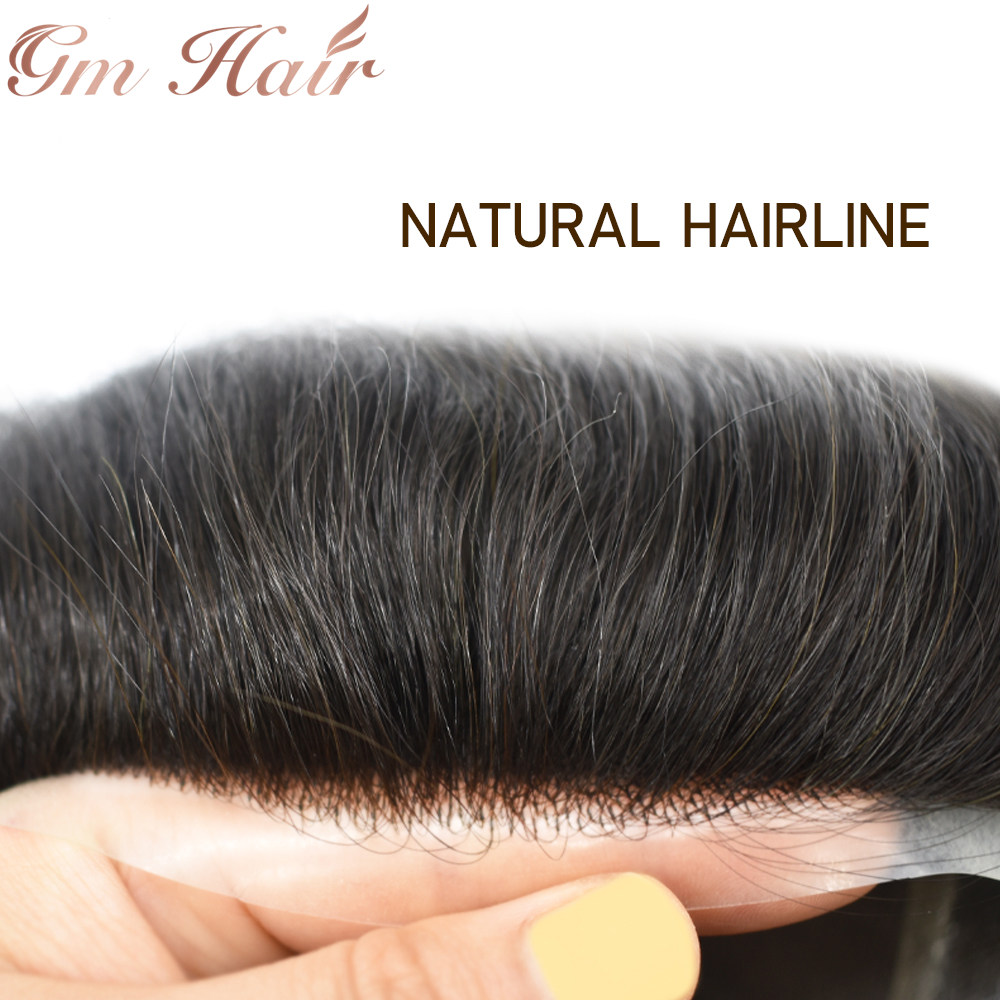
The year 2026 does not simply tweak the old rules of men’s grooming. It dismantles them. Textured hairstyles—once the domain of natural hair with a forgiving cut—now challenge the very construction of men’s hair systems. The old goal was invisibility: a system that mimics a neat, dense, uniform scalp.
The Death of the "Perfect" Hairline
For two decades, the hair system industry engineered toward an unattainable ideal: a hairline so straight and dense it looked painted on. 2026’s textured movement declares that ideal obsolete. The modern client asks for mess—deliberate, sculpted mess. A hair system now needs a hairline that breaks into soft, irregular points, with baby hairs that refuse to lie flat. This demands a radical change in how units are knotted. Instead of every hair rooted at the same angle, technicians implant at varying degrees of emergence, creating the illusion of hair that grows in different directions—just like a real scalp after a windy commute.
Ventilation Becomes an Art of Chaos
The craft of ventilation—how each strand is tied into the base—used to prioritize density and evenness. In 2026, it prioritizes rhythm in irregularity. Textured cuts like the French crop with a twisted fringe, the modern shag, or the "wet-look surfer" rely on strands that clump, separate, and cross each other. Hair systems now feature mixed diameters (fine for the temples, coarser at the crown) and intentionally varied rooting depths.
The Base Material Has to Breathe—or Absorb
Textured styling relies on product—clays, sea salt sprays, matte pastes. A hair system’s base can no longer be completely waterproof and slick. The new generation of bases incorporates micro-perforated polyurethane and hybrid lace-skin composites that allow a small amount of product absorption without compromising adhesion. This is a paradox solved by chemistry: the base must wick away sweat yet grip the scalp, and simultaneously let styling fibers bind without leaving residue. Manufacturers now test systems with "product load"—how much wax a unit can handle before turning greasy.
Cutting and Styling: No Longer "Cut-In" Maintenance
Previously, a hair system was cut to a fixed style—a conservative side part or a swept-back look—and that was it. The textured movement demands modular cutting. A client may wear the same system in three configurations across a week: slicked back for a boardroom, dramatically tousled for a dinner, and half-dried with a diffuser for a casual Saturday. This pushes the stylist’s role from placement to molding. Scissors now work differently on a system: instead of a single blunt cut, stylists use texturizing shears and point-cutting to remove bulk, creating internal movement. The system’s lace line must be virtually invisible even when the wearer runs fingers through the hair upward—a motion that reveals the base edge.
The Rise of the "Hybrid System"
The most disruptive change is the popularity of hybrid units—a system that combines frontal or crown replacement with natural hair integration. Textured styles often require length at the top and a faded, razor-sharp nape. A full system can’t achieve that crisp fade at the back. Instead, modern clients opt for a partial system (a "topper" or a "frontal patch") that seamlessly merges with their own shaved or cropped sides. The texture does the blending work. When the system hair is styled into a spiky fringe or a loose wave, the transition point becomes nearly undiscernible—because the eye is drawn to the play of light and movement, not the line where product meets skin.
Maintenance Rituals Transformed
Textured hair does not tolerate the old "wash and go" of sleek systems. It requires stripping and resetting. In 2026, the recommended regime includes a clarifying shampoo that removes clay buildup without stripping the system’s coloring, followed by a lightweight conditioning mist that restores flexibility to the fibers. Crucially, the drying method changes: never rubbing the system with a towel. Instead, wearers are taught to scrunch with a microfiber cloth and air-dry on a stand, letting the texture set naturally.
The Psychological Shift: From Concealment to Expression
The deepest change is not technical but psychological. Ten years ago, a man wearing a hair system lived in fear of detection. The textured movement flips that script: the system is now a tool for self-expression, same as a beard or a tattoo. The acceptance of receding hairlines alongside a deliberately messy crop—the "confident balding" look—has pushed designers to make systems that don’t hide age but celebrate a specific vibe. A 2026 client may ask for a system that looks "two days post-beach," with sun-kissed highlights and unruly strands.
Breaking the Stigma Through Texture
The cultural ripples are significant. As textured systems become more common, the stigma of "fake hair" dissolves into the vast gray area of grooming choices—like hair dye, botox, or orthodontics. The textured style is inherently forgiving: its natural variation hides small imperfections in the base, the hairline, or the density. This forgiving nature has fueled a boom in first-time users, who were previously scared off by the clinical precision required of slick styles.
The Future of Craftsmanship
Machine-made systems, mass-produced in factories, are losing ground to semi-custom units that are finished by hand. This is a return to craftsmanship, but with 21st-century materials: breathable, durable, and capable of holding a strong texture without shedding.
The modern is no longer a secret to be guarded. It’s a canvas for the same artistic chaos that defines his clothing, his beard, his posture. Textured styles have done what no marketing campaign could: they made hair systems honestly desirable. The future is not about looking untouched—it’s about looking shaped by hand, and that hand is finally, proudly, human.